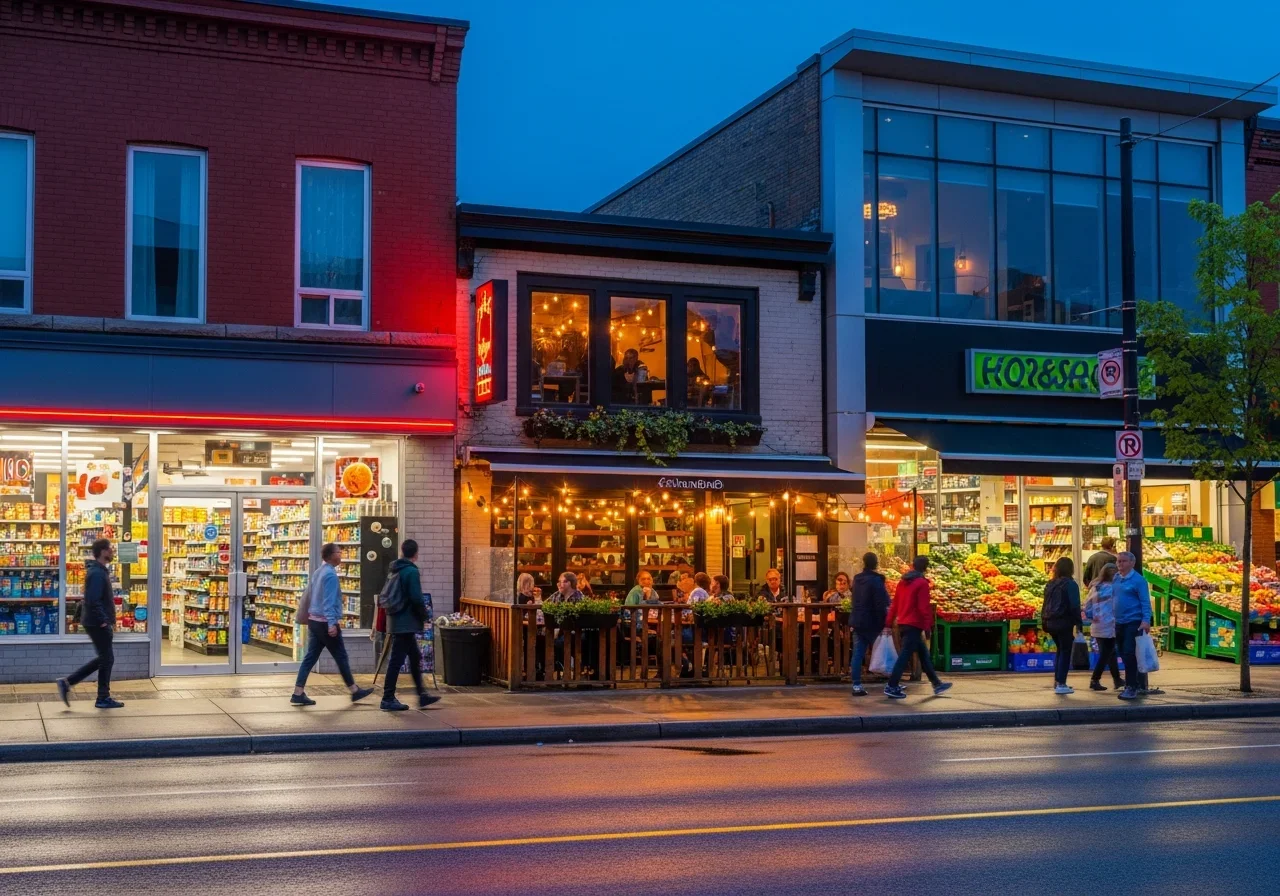
Buying your first small business in Canada is an exciting milestone, but it is also one of the most complex financial decisions you will ever make. Whether you are eyeing a bustling restaurant in Brampton, a convenience store in Mississauga, or a neighbourhood grocery shop in Toronto, each type of business comes with its own set of challenges, hidden costs, and regulatory requirements.
This guide covers everything a first-time buyer needs to know before signing on the dotted line. We break it down by business type so you can make a confident, informed decision.
ℹ️ Did You Know?
According to Statistics Canada, the food services and retail sectors account for over 30% of all small business transactions in Ontario. The Greater Toronto Area alone sees thousands of business ownership transfers each year, making it one of the most active markets in the country for small business acquisitions.
Why Small Business Ownership Is Booming in the GTA
The Greater Toronto Area has become a magnet for aspiring entrepreneurs, particularly first-generation Canadians and newcomers looking to build wealth through business ownership. Several factors are fuelling this trend:
Immigration-driven demand: Canada welcomed over 470,000 new permanent residents in 2025, many settling in the GTA with entrepreneurial ambitions
Established customer bases: Buying an existing business means inheriting a proven revenue stream rather than starting from zero
Franchise and independent options: The GTA offers a wide range of opportunities from franchise restaurants to independent corner stores
Government support programs: Programs like the Canada Small Business Financing Program (CSBFP) make it easier to secure funding
Growing population: The GTA is projected to reach 8.6 million people by 2031, creating sustained demand for food, retail, and convenience services
💡 Pro Tip
Before you even start browsing listings, get pre-approved for financing. Knowing your budget upfront saves months of wasted effort and puts you in a stronger negotiating position. The Canada Small Business Financing Program covers loans up to $1,150,000 for equipment and leasehold improvements.
The Universal Checklist: What Every First-Time Buyer Must Do
Regardless of whether you are buying a restaurant, convenience store, or grocery shop, these foundational steps apply to every small business purchase in Canada.
STEP 1
Understand Your Financial Position
Know What You Can Truly Afford
Calculate your total available capital: Include personal savings, RRSP withdrawals (Lifelong Learning Plan or Home Buyers' Plan do not apply here), family contributions, and potential loan amounts
Budget for more than the purchase price: You will need working capital (3-6 months of operating expenses), legal fees ($3,000-$8,000), accounting fees ($2,000-$5,000), and potential renovation costs
Understand the debt service coverage ratio (DSCR): Lenders want to see that the business generates enough cash flow to cover loan payments. A DSCR of 1.25 or higher is typically required
Get a business valuation: Never rely solely on the seller's asking price. Hire a Chartered Business Valuator (CBV) to determine fair market value based on assets, cash flow, and industry multiples
Funding Source
Typical Amount
Key Requirement
Personal Savings
Varies
Minimum 10-20% of purchase price recommended
Canada Small Business Financing Program (CSBFP)
Up to $1,150,000
Must be a Canadian business with <$10M annual revenue
BDC (Business Development Bank)
$50,000 - $500,000+
Viable business plan required
Conventional Bank Loan
Varies
Strong credit, collateral, 2+ years financials
Vendor Take-Back (VTB) Financing
10-40% of price
Seller finances a portion, signalling confidence
STEP 2
Assemble Your Advisory Team
You Cannot Do This Alone
Business broker: A licensed broker understands market valuations, deal structures, and can find off-market opportunities. In the GTA, experienced brokers like Team Shailesh specialize in specific sectors
Accountant (CPA): Essential for reviewing financial statements, tax returns, and identifying red flags in the books. They will also advise on the most tax-efficient purchase structure
Lawyer: A business acquisition lawyer will review the Asset Purchase Agreement (APA) or Share Purchase Agreement (SPA), negotiate terms, handle due diligence, and ensure compliance with Ontario regulations
Insurance broker: Business insurance is not optional. You need commercial general liability, property insurance, and potentially business interruption coverage before closing day
⚠️ Warning
Never skip the lawyer. Verbal agreements and handshake deals are a recipe for disaster. In Ontario, there are specific legal requirements around business transfers, lease assignments, and employee obligations under the Employment Standards Act. A $3,000-$5,000 legal fee can save you from a $50,000+ mistake.
STEP 3
Conduct Thorough Due Diligence
Trust, But Verify Everything
Review 3-5 years of financial records: Tax returns (T2 for corporations, T1 for sole proprietors), bank statements, POS reports, supplier invoices, and payroll records
Verify the revenue independently: Cross-reference reported sales with HST filings, bank deposits, and POS system data. Cash-heavy businesses are notorious for underreporting income
Check all licences and permits: Ensure the business holds all required federal, provincial, and municipal licences, and that they are transferable to a new owner
Inspect the physical premises: Look for deferred maintenance, equipment condition, health inspection history, and any building code violations
Review the lease carefully: The commercial lease is often the most critical document. Understand the remaining term, renewal options, rent escalation clauses, and whether the landlord will approve a lease assignment
ℹ️ Did You Know?
In Ontario, a landlord cannot unreasonably withhold consent to a lease assignment under the Commercial Tenancies Act. However, "unreasonably" is subjective, and landlords can (and do) impose conditions. Start the lease assignment conversation early in the process to avoid last-minute surprises.
STEP 4
Evaluate the Location and Market
Location Can Make or Break Your Business
Study the trade area demographics: Use Statistics Canada census data to understand the population density, household income, age distribution, and ethnic composition of the surrounding area
Analyze foot traffic and accessibility: Visit the location at different times of day and week. Is there adequate parking? Is it near public transit? What is the visibility from the street?
Research the competition: How many similar businesses operate within a 2-5 km radius? Is the market saturated or underserved?
Check municipal zoning and development plans: Upcoming road construction, transit projects, or new developments can dramatically impact customer access and future property values
Understand the neighbourhood trajectory: Is the area gentrifying, stable, or declining? Areas along new transit lines (like the Eglinton Crosstown or Ontario Line) are seeing significant appreciation
💡 Pro Tip
The City of Toronto, Peel Region, and York Region all publish development application databases online. Checking upcoming projects near your potential business can reveal whether a new competitor is about to open down the street, or whether a residential tower will bring thousands of new potential customers.
STEP 5
Understand the Purchase Structure
Asset Purchase vs. Share Purchase
Asset purchase (most common for small businesses): You buy specific assets like equipment, inventory, customer lists, and goodwill. You do NOT inherit the seller's liabilities, debts, or legal obligations
Share purchase: You buy the shares of the corporation that owns the business. This means you inherit everything, including all liabilities, debts, contracts, and potential legal issues
Hybrid structures: Some deals combine elements of both, particularly when the business holds valuable contracts or licences that cannot be easily transferred
Factor
Asset Purchase
Share Purchase
Liability exposure
Low (only purchased assets)
High (inherit all liabilities)
Tax efficiency for buyer
Better (can claim CCA on assets)
Worse (no step-up in asset values)
Tax efficiency for seller
Worse (potential recapture)
Better (capital gains exemption possible)
Complexity
Moderate
Higher
Licence transfer
May need re-application
Usually stays with corporation
Common for
Small businesses, first-time buyers
Larger businesses, franchise transfers
⚠️ Warning
If a seller insists on a share purchase for a small restaurant, convenience store, or grocery, proceed with extreme caution. There may be hidden liabilities, outstanding CRA assessments, or pending lawsuits that they want to transfer to you. Always have your lawyer and accountant conduct exhaustive due diligence on a share purchase.
Buying a Restaurant in the GTA: What You Need to Know
Restaurants are among the most sought-after small business acquisitions in the Greater Toronto Area, but they also carry the highest risk. Here is what to watch for.
STEP 6
Restaurant-Specific Due Diligence
The Kitchen Is Where Deals Die
Health inspection history: Request the last 3 years of DineSafe inspection reports (Toronto) or local public health records. Repeated critical infractions are a major red flag
Equipment condition and age: Commercial kitchen equipment is expensive. Have a restaurant equipment specialist assess the condition of ovens, fryers, refrigeration units, hood ventilation, and grease traps
Liquor licence transfer: If the restaurant has a liquor licence, understand that the AGCO (Alcohol and Gaming Commission of Ontario) requires a new application from the buyer. This process can take 6-12 weeks
Food handler certification: At least one person on each shift must hold a valid food handler certificate in Ontario. Budget for training if you are new to the industry
Grease trap compliance: Many restaurant deals fall apart over grease trap issues. Ensure the system is compliant with municipal bylaws and has been recently serviced
Staff retention: Kitchen staff and experienced servers are extremely difficult to replace in the current GTA labour market. Negotiate staff retention agreements as part of the deal
Restaurant Cost Factor
Typical Range (GTA)
Notes
Purchase price (independent)
$100,000 - $400,000
Depends on revenue, location, lease
Purchase price (franchise)
$200,000 - $800,000+
Includes franchise fee and build-out
Liquor licence transfer
$500 - $1,500
Plus AGCO processing time (6-12 weeks)
Kitchen equipment audit
$500 - $1,000
Hire a certified technician
Renovation/refresh
$20,000 - $100,000+
Often needed for rebranding
Monthly rent (GTA average)
$4,000 - $15,000
Varies hugely by location and size
Food cost target
28-35% of revenue
Higher = potential inefficiency
Labour cost target
25-35% of revenue
Including payroll taxes and benefits
STEP 7
Restaurant Red Flags to Watch For
Walk Away If You See These
Declining revenue trend: If sales have dropped year-over-year, find out why before assuming you can reverse the trend
Over-reliance on delivery apps: Restaurants that generate more than 40% of revenue from UberEats, DoorDash, or SkipTheDishes are vulnerable to commission increases and algorithm changes
High staff turnover: If employees are constantly leaving, there may be deeper management or culture issues
Deferred maintenance on ventilation: Hood and exhaust system repairs can cost $10,000-$50,000+ and are non-negotiable for compliance
No written recipes or systems: A restaurant that relies entirely on one chef's knowledge has a key-person risk that makes the business fragile
Lease with less than 3 years remaining: A short lease gives the landlord leverage to dramatically increase rent or refuse renewal
Buying a Convenience Store in the GTA
Convenience stores are often seen as lower-risk, cash-flowing businesses, but they come with their own unique set of considerations.
STEP 8
Convenience Store Essentials
Verify the Revenue, Understand the Margins
Lottery terminal is king: A lottery terminal from the OLG (Ontario Lottery and Gaming Corporation) is one of the most valuable assets a convenience store can have. Verify that the terminal licence is transferable and in good standing
Tobacco licence: If the store sells tobacco products, ensure it holds a valid Tobacco Retail Dealer's Permit. Ontario has strict regulations around tobacco display and sales to minors
ATM revenue: Many convenience stores earn significant passive income from ATM machines. Understand the contract terms, revenue split, and whether the ATM is owned or leased
Verify cash sales carefully: Convenience stores are cash-heavy businesses. Cross-reference reported revenue with HST filings, lottery commission statements, and supplier purchase volumes
Inventory valuation: Inventory is typically purchased separately from the business. Conduct a physical inventory count on closing day and agree on a valuation method in advance
Supplier agreements: Review any exclusive agreements with suppliers (Coca-Cola, Pepsi, cigarette distributors). These can lock you into pricing and display requirements
Convenience Store Metric
Healthy Range
Red Flag
Gross margin
25-35%
Below 20%
Lottery commission (monthly)
$2,000 - $8,000+
No lottery terminal
Monthly rent-to-revenue ratio
Under 10%
Over 15%
Daily transaction count
200-500+
Under 100
Average transaction value
$8 - $15
Under $5
Product spoilage/waste
Under 2%
Over 5%
💡 Pro Tip
When evaluating a convenience store, ask to see the OLG commission statements for the past 12 months. Lottery commissions are a transparent, verifiable revenue stream that cannot be manipulated. They are one of the most reliable indicators of actual foot traffic and customer volume.
Buying a Grocery Store in the GTA
Grocery stores, particularly ethnic and specialty grocers, are a thriving segment of the GTA small business market. Here is what makes them unique.
STEP 9
Grocery Store Specific Considerations
Higher Revenue, Higher Complexity
Perishable inventory management: Unlike convenience stores, grocery stores carry significant perishable inventory (produce, dairy, meat). Understand the shrinkage rate and waste management systems
Supplier relationships are critical: Grocery stores often depend on relationships with specific wholesalers and direct importers. Ensure these relationships will transfer with the sale
Cold chain infrastructure: Walk-in coolers, freezers, and refrigerated display cases are expensive to replace. Have them professionally inspected, including checking refrigerant levels and compressor condition
Weighing and pricing compliance: Measurement Canada requires that all scales used in trade be inspected and certified. Non-compliance can result in fines and business disruption
Organic and specialty certifications: If the store sells organic products, verify that all required certifications are current and transferable
Employee knowledge and specialization: In ethnic grocery stores, staff members often have specialized knowledge about products, preparation methods, and customer preferences. Their retention is critical to maintaining the customer base
Grocery Store Cost Factor
Typical Range (GTA)
Notes
Purchase price (small independent)
$150,000 - $600,000
Based on revenue and location
Purchase price (medium format)
$500,000 - $1,500,000+
Higher inventory and equipment value
Cold storage equipment replacement
$15,000 - $80,000 per unit
Walk-in coolers, display cases
Monthly inventory investment
$30,000 - $150,000+
Depending on store size
Shrinkage/waste budget
2-5% of inventory
Perishables drive this higher
POS system (modern)
$5,000 - $15,000
Essential for inventory tracking
ℹ️ Did You Know?
The GTA's diverse population has created enormous demand for ethnic and specialty grocery stores. South Asian, Middle Eastern, East Asian, Caribbean, and African grocery stores are among the fastest-growing segments. If you are buying an ethnic grocery, understanding the community's preferences and seasonal buying patterns is essential for maintaining revenue.
Key Legal and Regulatory Requirements in Ontario
STEP 10
Navigate the Legal Landscape
Compliance Is Not Optional
Business registration: Register your business with the Ontario government. Sole proprietorships and partnerships register under the Business Names Act. Corporations must be registered with the Ontario Business Registry
HST registration: If your business earns more than $30,000 annually (virtually guaranteed for any restaurant, convenience, or grocery store), you must register for HST collection
WSIB (Workplace Safety and Insurance Board): Most Ontario businesses with employees must register with WSIB and pay premiums. Restaurants, convenience stores, and grocery stores all fall under mandatory coverage industries
Employment Standards Act compliance: Understand your obligations regarding minimum wage ($17.20/hour in Ontario as of 2026), overtime pay, vacation entitlements, and termination requirements
Municipal business licence: Most GTA municipalities require a business licence. Requirements and fees vary by municipality and business type
Food premises licence: Required for any business that prepares, serves, or sells food. Issued by the local public health unit after an inspection
Accessibility compliance: Under the AODA (Accessibility for Ontarians with Disabilities Act), businesses must meet specific accessibility standards for customer-facing premises
How Much Should You Pay? Valuation Methods Explained
Understanding how small businesses are valued will protect you from overpaying.
Valuation Method
How It Works
Best For
Seller's Discretionary Earnings (SDE) Multiple
Business value = SDE x industry multiple (typically 1.5-3x)
Most small businesses under $1M
EBITDA Multiple
Business value = EBITDA x multiple (typically 3-5x)
Larger businesses, franchises
Asset-Based Valuation
Value of tangible assets minus liabilities
Asset-heavy businesses (grocery stores)
Comparable Sales
Compare to similar businesses recently sold in the area
When market data is available
Discounted Cash Flow (DCF)
Present value of projected future cash flows
Businesses with growth potential
💡 Pro Tip
In the GTA market, most independent restaurants sell for 1.5-2.5x SDE, convenience stores for 2-3x SDE, and grocery stores for 2-3.5x SDE. However, location, lease terms, and growth potential can push multiples significantly higher. Always benchmark against comparable recent sales in the same area.
Common Mistakes First-Time Buyers Make
Avoid these costly errors that we see repeatedly in the GTA small business market:
Falling in love with the idea, not the numbers: Passion is important, but the financials must work. Run the numbers conservatively and stress-test your projections
Underestimating working capital needs: You need at least 3-6 months of operating expenses in reserve after closing. Running out of cash in the first year is the number one reason new owners fail
Not verifying revenue independently: Sellers can and do inflate revenue figures. Always cross-reference with bank statements, HST filings, and POS data
Ignoring the lease: A bad lease can destroy an otherwise good business. Short terms, high escalations, or restrictive clauses can trap you
Skipping the environmental assessment: For businesses with deep fryers, fuel storage, or dry cleaning operations, environmental contamination can create massive unexpected liabilities
Rushing the process: The average small business acquisition takes 3-6 months from offer to close. Cutting corners on due diligence to speed things up almost always leads to regret
Ready to Buy Your First Small Business in the GTA?
Team Shailesh specializes in helping first-time buyers find, evaluate, and acquire profitable small businesses across the Greater Toronto Area. From restaurants in Brampton to convenience stores in Mississauga and grocery shops in Toronto, we guide you through every step of the process.
SP
Shailesh Patel
Licensed Real Estate Broker | Team Shailesh | RE/MAX
With over 15 years of experience in commercial real estate and small business transactions across the Greater Toronto Area, Shailesh Patel has helped hundreds of first-time buyers successfully acquire restaurants, convenience stores, grocery shops, and other small businesses. His deep understanding of Ontario business regulations, valuation methods, and deal structuring has earned Team Shailesh a reputation as one of the most trusted names in GTA business brokerage.
Buy Small Business CanadaFirst Time Business BuyerRestaurant for Sale GTAConvenience Store OntarioGrocery Store TorontoSmall Business AcquisitionGTA Business BrokerCanada Small Business FinancingOntario Business LicenceBuy Restaurant BramptonMississauga Convenience StoreBusiness Valuation CanadaDue Diligence Small Business
This guide is for informational purposes only and does not constitute legal, financial, or business advice. Every small business transaction is unique, and outcomes depend on individual circumstances, market conditions, and deal-specific factors. All statistics, regulations, and financial figures referenced are based on data available as of early 2026 and are subject to change. Prospective buyers should consult with qualified legal, accounting, and business advisory professionals before making any purchase decisions. Team Shailesh and its affiliates are not responsible for any decisions made based on the information in this article. Provincial and municipal regulations vary and should be verified with the relevant authorities for your specific situation.